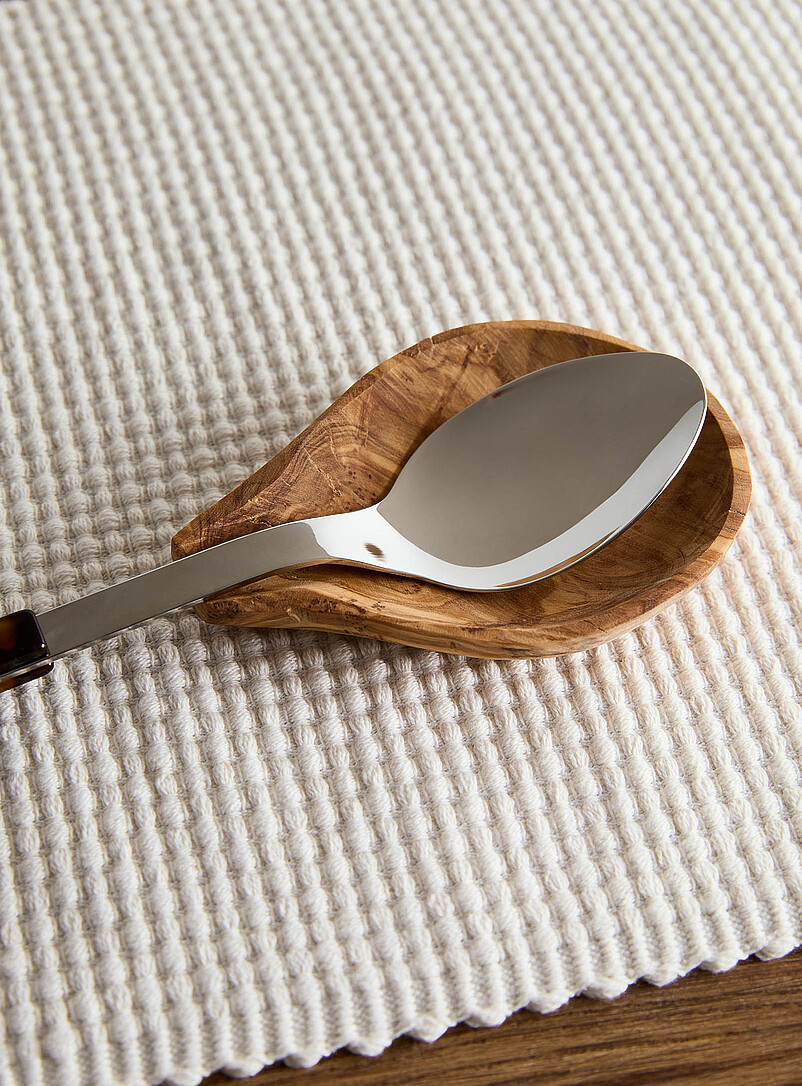
Danica
Olive Wood Spoon Rest
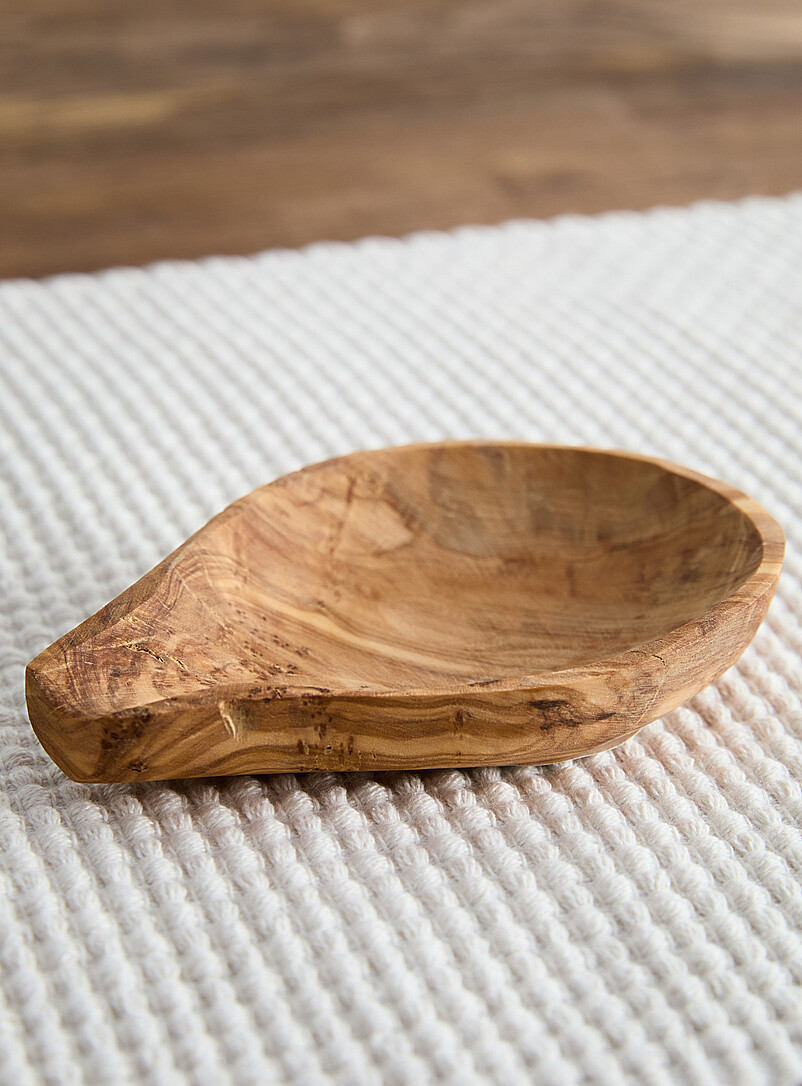
This olive wood spoon rest from Danica is a kitchen utensil holder that provides a designated resting spot for spoons and other cooking utensils during meal preparation, keeping countertops clean. Crafted from genuine natural olive wood, it features a unique grain and a shallow carved depression to hold utensils. It measures 3.5 x 5 inches (9 x 12.5 cm).
- Material
- Olive wood
- Category
- Home & Garden > Kitchen & Dining > Kitchen Tools & Utensils > Spoon Rests
Specifications
A natural olive wood spoon rest with unique grain pattern to keep the counter clean during meal preparation.
Keeps counter clean; unique natural wood grain
- Material
- Olive wood
- Condition
- new
- Category
- Home & Garden > Kitchen & Dining > Kitchen Tools & Utensils > Spoon Rests
Additional Attributes
- unique grain
- natural
- warm touch
- keeps counter clean
- Canadian brand
- genuine natural wood
Product Insights
This $15 olive wood spoon rest from Danica is a durable, handcrafted piece with a Janka hardness of 2,710 lbf that resists denting from metal utensils, yet it requires hand washing and regular oiling every 4–6 weeks to maintain its moisture resistance and develop a deepening patina over a 10+ year lifespan. Sustainably sourced from pruned branches, each rest has a unique grain with varied colors and figures, but it is only for utensils—not hot pots—and its 5-inch holder may not fully cradle longer spoons.
Verified claims
- Hardness
- Janka hardness 2,710 lbf resists denting and scratching from metal utensils.
- Moisture resistance
- Olive wood's natural oils help the rest resist warping from a wet spoon, but the spoon rest itself should not be soaked or put in the dishwasher.
- Maintenance
- Hand wash and oil every 4–6 weeks with food-grade mineral oil.
- Longevity
- Proper care yields a 10+ year lifespan, more than double bamboo's and outlasting acacia's 5–7 years.
- Grain
- Unique grain per rest: varied colors, dark streaks, and occasional curly or burl figure.
- Wood comparison
- Olive wood grain is more expressive and decorative than acacia, teak, or bamboo.
- Cleaning
- Hand wash with mild soap and dry immediately; never soak.
- Oiling
- Apply food-grade mineral oil every 4–6 weeks; avoid vegetable oils.
- Patina
- Olive wood's patina deepens with regular oiling, making each piece richer and more unique over years.
- Teak comparison
- Olive wood's grain deepens with patina, offering warmer decor than teak but with less moisture resistance.
- Sourcing
- Sustainably sourced from olive wood pruned from non-bearing branches.
- Finish
- Untreated natural wood with no sealants.
- Durability
- Rated Excellent with a 10+ year lifespan — more than double bamboo's.
- Value
- $15 CAD with 10+ year lifespan, reducing per-year cost vs acacia or bamboo.
- Handle clearance
- A typical 12–15 inch spoon's handle extends past the 5-inch rest.
- Use case
- Intended only for utensils — not hot pots or pans.
- Heat resistance
- Direct heat can scorch or crack the wood — use only as a utensil rest.
- Stain absorption
- Absorbs food oils and sauces; mineral oil every 4–6 weeks limits stains and builds patina.
- Handcrafted variation
- Each rest is carved from natural olive wood, so grain and color vary from piece to piece.
- Standard spoon fit
- At 5 inches long, the rest holds the head of a standard cooking spoon, but the handle of a typical 12–15 inch spoon will likely extend past the rest and may touch the counter.
- Sustainable sourcing
- Carved from olive wood harvested from branches that have stopped producing fruit, repurposing pruned material rather than cutting down trees.
Product record
- Title
- Olive Wood Spoon Rest
- Brand
- Danica
- Price
- 15 CAD
- Availability
- In stock
Buying Guide
0 comparisons · 2 sourcesImage Analysis
2 images- 01
Product
A small carved olive wood spoon rest with a shallow oval depression and visible wood grain and natural edge contours.
- Overall shapeSingle-piece carved wooden rest with an asymmetrical oval footprint and a shallow central bowl carved to receive a utensil.
1 region
x 0.34 · y 0.22 · w 0.50 · h 0.34 (high) - Edge and profileRaised rim around the depression with a gently sloping lip and a slightly irregular outer edge following the wood's natural contours.
1 region
x 0.34 · y 0.22 · w 0.50 · h 0.34 (high) - Surface textureSmooth, polished surface showing pronounced olive wood grain patterns, knots, and swirling growth rings.
1 region
x 0.40 · y 0.27 · w 0.36 · h 0.24 (high) - FinishMatte to low-sheen polished finish with visible color variation following the wood grain.
1 region
x 0.40 · y 0.27 · w 0.36 · h 0.24 (high) - Occlusion by propA large stainless steel spoon is resting in the carved depression and partially covers the central area of the spoon rest.
1 region
x 0.33 · y 0.20 · w 0.48 · h 0.28 (high)
Other
Image shows the spoon rest staged on a waffle-knit cream textile atop a wooden surface; a stainless steel serving spoon is used as a prop. Soft directional lighting creates mild shadows and reflections on the spoon.
- Prop spoonLarge polished stainless steel spoon with a reflective bowl and a flat rectangular neck; handle extends out of frame to the left.
1 region
x 0.05 · y 0.30 · w 0.56 · h 0.30 (high) - Background surfaceCream-colored waffle-weave textile placemat with a regular raised square pattern covering most of the image area.
1 region
x 0.00 · y 0.00 · w 1.00 · h 0.86 (high) - Supporting tableNarrow visible strip of darker wood table at the bottom edge of the image beneath the textile.
1 region
x 0.00 · y 0.86 · w 1.00 · h 0.14 (high) - Lighting and reflectionsSoft, diffuse directional light from upper left producing subtle shadows under the spoon rest and clear reflections on the spoon bowl.
- Shot compositionClose-up angled top view showing the spoon rest near the upper-right quadrant and the utensil extending toward the left edge; image is vertically oriented.
Colors
warm olive brown· wood body#AD7A4B- Overall shapeSingle-piece carved wooden rest with an asymmetrical oval footprint and a shallow central bowl carved to receive a utensil.
- 02
Product
A single carved olive-wood spoon rest with a shallow oval bowl and a short tapered projection at one end; visible natural wood grain and a smooth, hand-carved surface.
- Overall shapeShallow oval dish with a gently concave cavity and a short tapered projection on the left side resembling a small handle or pouring tip.
1 region
x 0.08 · y 0.50 · w 0.84 · h 0.30 (high) - Material and finishSingle-piece carved wood with a smooth, sanded finish and visible tool marks or subtle carving texture inside the cavity.
1 region
x 0.18 · y 0.52 · w 0.64 · h 0.26 (high) - Wood grain patternProminent irregular grain and darker streaks running across the surface, creating banded and swirled patterns throughout the dish.
2 regions
x 0.12 · y 0.52 · w 0.40 · h 0.22 (high); x 0.52 · y 0.50 · w 0.38 · h 0.24 (high) - Edge profileThin rounded rim around the bowl with slightly thicker carved thickness at the projection/tip.
2 regions
x 0.08 · y 0.48 · w 0.36 · h 0.18 (medium); x 0.44 · y 0.44 · w 0.46 · h 0.20 (medium) - Visible imperfectionsSmall natural knots and darker spots in the wood visible on the left projection and along the front rim.
1 region
x 0.08 · y 0.56 · w 0.20 · h 0.14 (high)
Other
Low-angle close-up photograph of the spoon rest placed on a textured white knit surface with a blurred wooden background; soft diffused lighting casts a gentle shadow beneath the product.
- Background surfaceThick white ribbed or waffle-knit fabric used as a staging surface beneath the product.
1 region
x 0.00 · y 0.50 · w 1.00 · h 0.50 (high) - Supporting surface behindBlurred wooden tabletop visible in the upper portion of the image, out of focus.
1 region
x 0.00 · y 0.00 · w 1.00 · h 0.35 (high) - Shot composition and angleLow-front perspective slightly angled to the right, centering the spoon rest in the lower half of the frame with shallow depth of field.
- Lighting and shadowSoft, diffused lighting from above or front-left producing a soft shadow under the front edge of the spoon rest and mild highlights on the rim.
Colors
warm golden brown· main body#CA9464dark chestnut streaks· grain and streaks#7B4D2C- Overall shapeShallow oval dish with a gently concave cavity and a short tapered projection on the left side resembling a small handle or pouring tip.
Documents & Data
Customer Reviews
1 total1 reviews · out of 5
Pose cuillère
Superbe