Penguin Random House
Madaq Simple And Delicious Everyday Recipes With The Flavors Of Morocco Cookbook
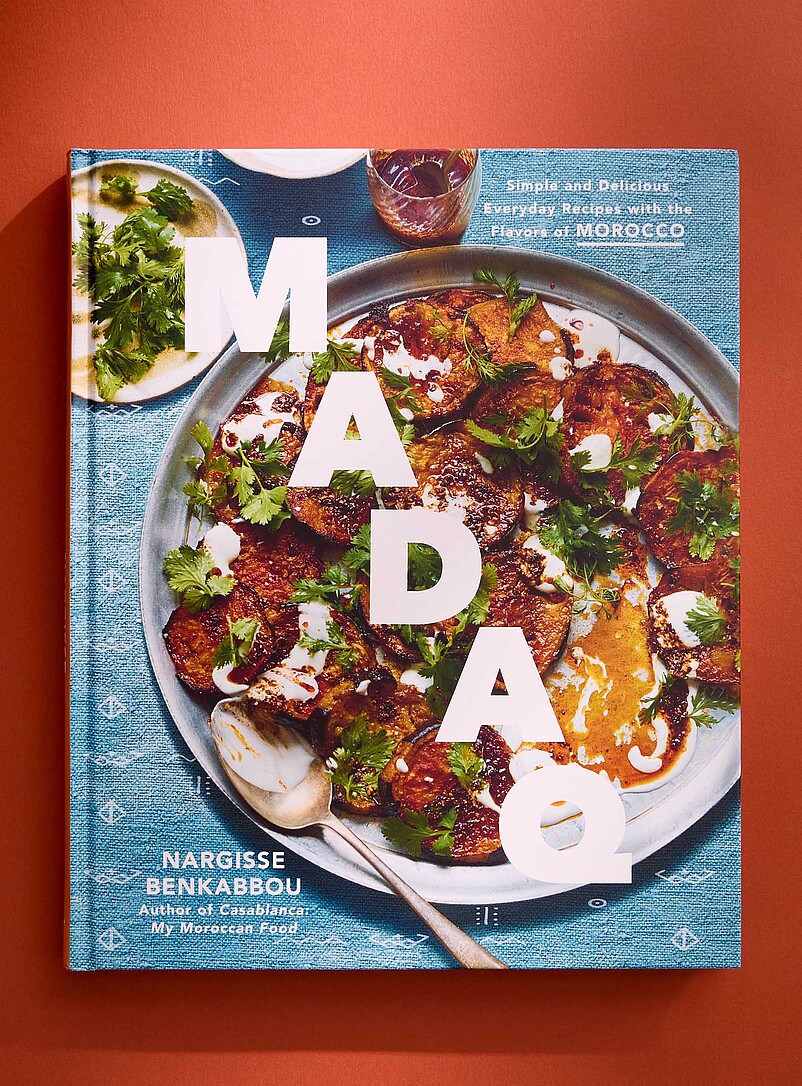
Madaq: Simple and Delicious Everyday Recipes with the Flavors of Morocco is a hardcover cookbook by Nargisse Benkabbou, published by Appetite by Random House in April 2026. It provides 304 pages of accessible Moroccan recipes, including tagines, couscous, roasted chicken, stuffed breads, and bastilla, adapted for contemporary home kitchens. Specifications include an English-language text, ISBN 9780525612988, and trim size 9.25 x 11.25 inches (23.5 x 28.5 cm).
- Category
- Media > Books > Print Books
Specifications
A cookbook offering traditional Moroccan recipes adapted for modern kitchens, featuring fragrant tagines, couscous, roasted chicken, stuffed breads, and bastilla, with beautiful illustrations.
Beautifully illustrated; includes recipes for tagines, couscous, roasted chicken, stuffed breads, and bastilla.
- Material
- Semi-gloss paper, rigide reliure
- Gender
- unisex
- Age Group
- adult
- Condition
- new
- Category
- Media > Books > Print Books
Additional Attributes
- Author: Nargisse Benkabbou
- English language
- Hardcover
- 304 pages
- Publisher: Appetite By Random House
- Date of publication: April 2026
- ISBN: 9780525612988
- 9.25" x 11.25" (23.5 x 28.5 cm)
- Traditional recipes adapted to today's kitchens
- Bold flavours of Morocco
- North African cuisine influenced by Berber, Arab and Mediterranean traditions
- Beautifully illustrated
Product Insights
This cookbook bridges authentic Moroccan flavors with everyday Western kitchens through the expertise of a bicultural author whose analytical background and decade of blog testing ensure unusually reliable recipes. It eliminates barriers with common ingredients, no specialized cookware, and beginner-friendly, weeknight-ready instructions, including a full vegetarian chapter and a DIY pantry section for harissa, preserved lemons, and ras el hanout. The 304-page hardcover, with a decor-friendly patterned cover and large format, doubles as a coffee-table display, though it lacks step-by-step photos. Cultural headnotes enrich the experience, while Library Journal confirms clear, accessible instructions.
Verified claims
- Author background
- Bicultural upbringing and analytical background make her recipes unusually reliable.
- Recipe track record
- Decade of blog testing and a successful debut cookbook precede 'Madaq'.
- Everyday adaptation
- Recipes use common ingredients and require no specialized equipment.
- Author expertise
- Author's management consulting and bicultural upbringing inform the book's accessible, structured recipes.
- Vegetarian chapter
- A dedicated vegetarian chapter features the Berber Vegetarian Skillet Tagine and Ras el Hanout Mushroom Tacos.
- Beginner-friendly
- No specialized equipment needed; recipes are beginner-friendly and weeknight-ready.
- Ease of use
- Recipes require no specialty equipment and build a Moroccan pantry from scratch.
- Variety
- A full vegetarian chapter complements all classic Moroccan pillars in 304 pages.
- Authenticity
- Diasporic author with decade of testing delivers culturally grounded recipes for Western kitchens.
- Cookware
- No specialized cookware needed; recipes like Berber Vegetarian Skillet Tagine use a standard skillet.
- Ingredient prep
- The flavor boosters chapter includes from-scratch recipes for harissa, preserved lemons, and ras el hanout that can be made in bulk and customized.
- Countertop use
- Rigid cover (rigide reliure) stays open and wipes clean; semi-gloss paper resists smudges.
- Display appeal
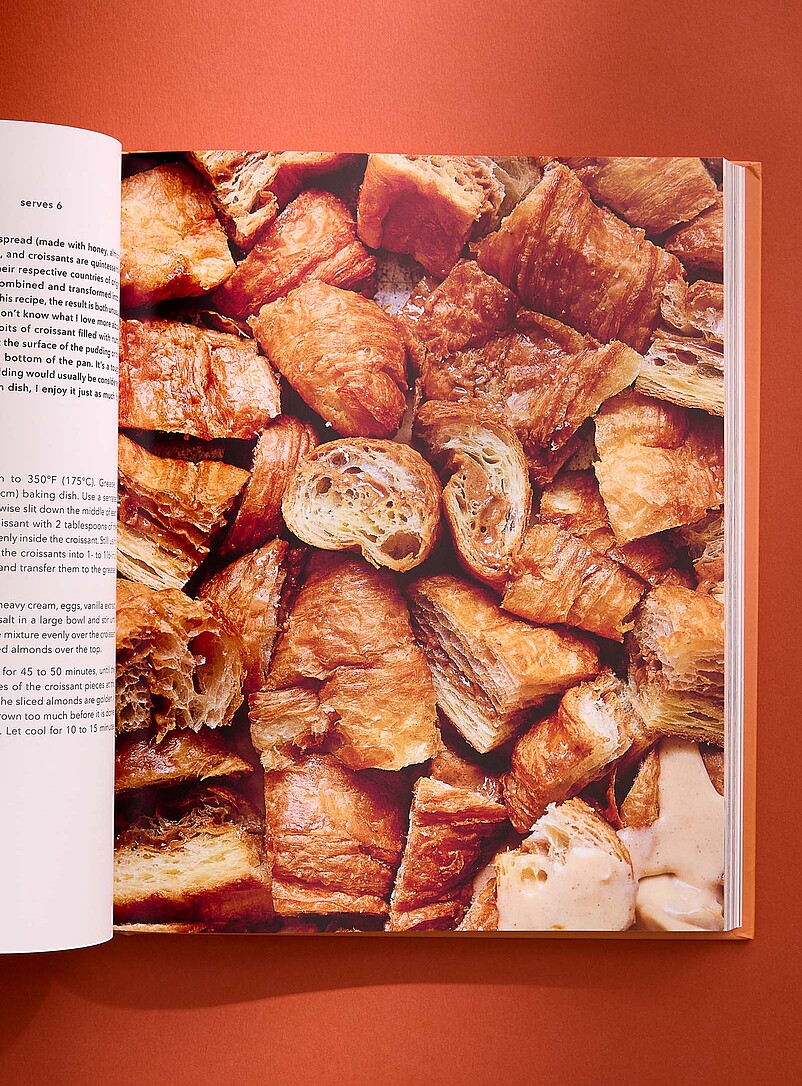
- Large 9.25x11.25-inch format, patterned cover, 304 pages, and full-color photography create a coffee-table display piece.
- Cultural context
- Headnotes explain the meaning of madaq, each dish's cultural roots, and the art of Moroccan hosting.
- Recipe adaptation
- DIY pantry, fusion dishes, vegetarian chapter, skillet adaptations, and 300+ pages make Moroccan cooking accessible.
- Recipe design
- Recipes use common cookware and clear, community-tested instructions.
- Ingredient sourcing
- Most ingredients are commonly available, and the few specialty items like preserved lemons, harissa, and ras el hanout can be made from scratch using the flavor boosters chapter.
- Dietary options
- A full vegetarian chapter offers substantial mains, including skillet tagine.
- Content scope
- 304 pages cover tagines, couscous, stuffed breads, and bastilla.
- Photography
- Finished dishes and cultural scenes, no step-by-step technique photos.
- Recipe reliability
- Recipes stress-tested through a decade of blog reader feedback.
- Accessibility
- Recipes remove equipment and ingredient barriers.
- Cover design
- Patterned blue cover inspired by Moroccan zellige tilework is decor-friendly.
- Format and build
- The 9.25x11.25-inch hardcover stays open on a countertop and has a wipeable cover; its semi-gloss pages resist smudges and light moisture.
- Library Journal review
- Received a pre-publication review from Library Journal.
- Recipe instructions
- Library Journal review notes recipes have clear instructions and are accessible.
- Vegan options
- The cookbook is not explicitly labeled vegan, but many recipes are plant-based or can be easily adapted, and it includes a section on salads and small vegetable plates.
- Nutritional information
- The cookbook does not provide nutritional information or calorie counts for its recipes.
Product record
- Title
- Madaq Simple And Delicious Everyday Recipes With The Flavors Of Morocco Cookbook
- Brand
- Penguin Random House
- Price
- 45 CAD
- Availability
- In stock
Buying Guide
1 comparison · 8 sourcesUses
Cooking everyday Moroccan dishes at home
A cookbook for home cooks who want to recreate the bold flavours of North African cuisine, with recipes influenced by Berber, Arab and Mediterranean traditions. Traditional dishes like tagines, couscous, roasted chicken, stuffed breads and bastilla are adapted to today's kitchens and described as accessible and authentic. The beautifully illustrated book celebrates Morocco's warm, colourful cuisine done with ease at home.[1]
Cooking everyday Moroccan recipes step by step
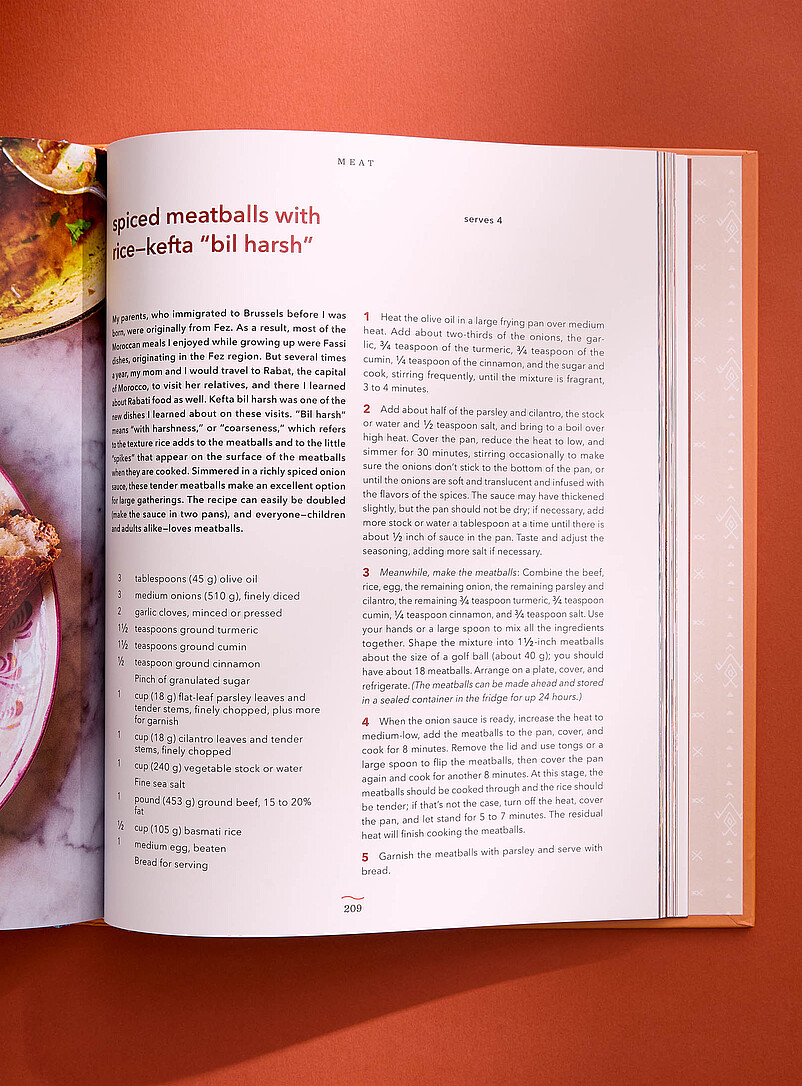
This cookbook supports everyday home cooking with Moroccan flavors, with recipes laid out as a two-page spread: a title, a serves count (such as serves 4), and an ingredients list on one side, and numbered preparation steps on the other. The visible example, spiced meatballs with rice (kefta 'bil harsh') from the meat section, shows how each recipe walks through sequential steps so you can follow along while you cook.[2,3]
Product comparison
Compared within this brand.
This product Madaq Simple And Delicious Everyday Recipes With The Flavors Of Morocco Cookbook Penguin Random House simons.ca | Same brand Cooking The Borderlands Spice And Smoke Between Mexico And The States Cookbook Penguin Random House simons.ca | Same brand Slurp Recipe Book: Traditional Ramen Recipes And Modern Makeovers Cookbook Penguin Random House simons.ca |
|---|---|---|
| Madaq Simple And Delicious Everyday Recipes With The Flavors Of Morocco Cookbook: Choose this if you want to explore Moroccan home cooking, with accessible, traditional recipes like tagines, couscous, roasted chicken, stuffed breads and bastilla adapted for today's kitchens. This beautifully illustrated 304-page hardcover by Nargisse Benkabbou lays out recipes with clear numbered steps, serving counts, and full-page food photography. Note that recipe text is set in small, dense print on semi-gloss pages, which may be a drawback if you prefer larger type.[1,3,4] | Cooking The Borderlands Spice And Smoke Between Mexico And The States Cookbook: Choose this if you want more than 100 colourful recipes blending Mexican traditions and American influences from the California-to-Sonoran Desert borderlands, told through Claudette Zepeda's personal anecdotes and family stories in a geographically organized, 288-page hardcover. A first-time cook reported the corn tortilla instructions were excellent enough to follow on a first attempt, and the book is described as doubling as a work of culinary anthropology. Note that it is in English, published in June 2026.[5,6,7] | Slurp Recipe Book: Traditional Ramen Recipes And Modern Makeovers Cookbook: Choose this if you want to learn traditional ramen from start to finish, including making your own noodles and broths, with clear instructions and photos guiding each step. With over 60 ramen bowl and side dishes spanning pork, poultry, seafood, vegetarian options, and original modern interpretations, it suits cooks who like to adapt flavours with spices, seasonings, and oils. It is a 208-page hardcover in English from Penguin Random House, published in September 2025, and the merchant characterizes the results as restaurant-worthy ramen made easy.[8] |
Image Analysis
3 images- 01
Product
Front cover of a cookbook shown flat-on; large white stacked title letters over a photographic plate of cooked food with green herb garnish, set on a teal fabric cover background.
- Overall objectA hardcover book shown front-facing, centered in the image with the full front cover visible and slight shadow to the left.
1 region
x 0.06 · y 0.06 · w 0.88 · h 0.88 (high) - Dominant cover photoA close-up overhead photograph of a round shallow plate of roasted browned vegetable slices or fritters topped with white sauce or yogurt drizzles and scattered green herb sprigs.
1 region
x 0.18 · y 0.12 · w 0.68 · h 0.66 (high) - Large title letters“Very large vertically stacked white sans-serif letters reading M A D A Q placed over the cover image, each letter occupying a separate vertical zone across the plate image.”
1 region
x 0.20 · y 0.06 · w 0.60 · h 0.88 (high) - Plate rim and spoonVisible pale off-white round plate rim and a metal spoon with a long handle positioned at lower-left of the plate, the spoon bowl partly resting on the plate.
1 region
x 0.12 · y 0.56 · w 0.42 · h 0.36 (high) - Herb garnishBright green herb sprigs (likely cilantro or parsley) scattered across the dish and also visible on a small plate at the cover upper-left.
2 regions
x 0.10 · y 0.08 · w 0.20 · h 0.18 (high); x 0.34 · y 0.18 · w 0.30 · h 0.28 (high) - Top-right subtitle block“A small white text block in the top-right area reading 'Simple and Delicious Everyday Recipes with the Flavors of MOROCCO'.”
1 region
x 0.64 · y 0.06 · w 0.28 · h 0.12 (high) - Author credit“Lower-left cover text block reading 'NARGISSE BENKABBOU' and below that a smaller line 'Author of Casablanca: My Moroccan Food'.”
1 region
x 0.08 · y 0.78 · w 0.34 · h 0.14 (high)
Other
Book placed on a solid rust-orange flat surface with even lighting and a soft shadow on the left; image is well-centered and fully in-frame.
- Background surfaceFlat rust-orange colored background filling the frame surrounding the book.
2 regions
x 0.00 · y 0.00 · w 0.06 · h 1.00 (high); x 0.94 · y 0.00 · w 0.06 · h 1.00 (high) - Shadow and lightingSoft shadow cast to the left of the book indicating a light source from the right; lighting is even with no strong specular glare on the cover.
- Shot compositionBook photographed straight-on and centered in the image with slight margin visible on all sides; no additional props or hands visible.
Colors
teal blue· cover background fabricwhite· large title letters#FAEDF2warm brown· cooked food surfaceleaf green· herb garnishcream and warm yellow· plate and sauce areas#DBD2D4silver metal· metal spoon#D4CBCD- Overall objectA hardcover book shown front-facing, centered in the image with the full front cover visible and slight shadow to the left.
- 02
Product
Open cookbook showing a full-page photographic spread of torn croissant pieces arranged tightly across the right-hand page; left-hand page partially visible with recipe text column.
- Full-page food photographRight-hand page of an open book contains a high-resolution photograph filling the page showing many irregularly torn and layered croissant pieces with visible flaky layers and browned, crisp surfaces.
1 region
x 0.20 · y 0.04 · w 0.74 · h 0.92 (high) - Visible pastry textureMany pieces show internal airy crumb with irregular holes and thin layered lamination; outer surfaces are glossy and crisp with browned flaky edges.
1 region
x 0.28 · y 0.16 · w 0.54 · h 0.58 (high) - Cream or sauce dollopA pale cream-colored dollop of sauce or cream is visible at the bottom-right corner of the photographed page, partially covering a pastry piece.
1 region
x 0.79 · y 0.82 · w 0.18 · h 0.14 (high) - Book gutter and page edgeCenter gutter of the open book is visible at the left edge of the photograph page; the book's right cover edge and the thickness of pages are visible along the far right.
2 regions
x 0.20 · y 0.00 · w 0.01 · h 1.00 (medium); x 0.95 · y 0.02 · w 0.04 · h 0.96 (medium) - Partial recipe text columnLeft-hand page shows a vertical recipe text column with multiple paragraphs and small type; text is printed on white page adjacent to the photo.
1 region
x 0.00 · y 0.06 · w 0.20 · h 0.88 (high) - Heading text on left page“serves 6”
1 region
x 0.02 · y 0.08 · w 0.08 · h 0.03 (high) - Temperature fragment in instructions“to 350F (175C).”
1 region
x 0.02 · y 0.46 · w 0.18 · h 0.05 (medium) - Small illegible fine print blockDense fine-print recipe paragraphs are present but most lines are too small to read in this image at full resolution.
1 region
x 0.02 · y 0.12 · w 0.18 · h 0.32 (high)
Other
Book is photographed lying open on a flat orange background with even lighting; image is framed to center the right-hand page photograph and includes slight shadow along the left inner gutter and subtle reflection on glossy page surface.
- Background surfaceFlat orange matte background fills the scene behind the open book.
1 region
x 0.00 · y 0.00 · w 1.00 · h 1.00 (high) - Shot compositionCamera view is a top-down, slightly angled overhead shot that captures the entire right-hand page and part of the left page and right book edge.
- Lighting and shadowEven studio lighting with soft shadow along the inner gutter and a small specular sheen on some pastry surfaces indicating glossy paper.
Colors
golden brown· croissant piecespale cream· cream or saucepaper white· book page background#FCECF1- Full-page food photographRight-hand page of an open book contains a high-resolution photograph filling the page showing many irregularly torn and layered croissant pieces with visible flaky layers and browned, crisp surfaces.
- 03
Product
Open cookbook spread showing a two-page recipe layout: left column with a recipe title and ingredient block, right column with numbered preparation steps; the book's trimmed orange cover/spine is visible at the right edge.
- Section header“Single-word header centered at the top of the spread reading 'MEAT'.”
1 region
x 0.46 · y 0.04 · w 0.12 · h 0.04 (high) - Recipe title“Large left-aligned recipe title in red lowercase reading 'spiced meatballs with rice–kefta 'bil harsh' '.”
1 region
x 0.05 · y 0.11 · w 0.56 · h 0.14 (high) - Serves statement“Small right-side text near the top reading 'serves 4'.”
1 region
x 0.66 · y 0.12 · w 0.14 · h 0.04 (high) - Left column bodyLeft-page body contains a block of paragraphs and an ingredients list printed in black; the paragraph text is legible at larger scale but treated here as a dense multi-paragraph block.
1 region
x 0.04 · y 0.22 · w 0.44 · h 0.61 (high) - Ingredients list areaIndented list of ingredients appears in the lower portion of the left column with numerical and measurement fragments visible as short lines.
1 region
x 0.05 · y 0.60 · w 0.32 · h 0.21 (medium) - Right column instructionsRight-page main column contains numbered steps (1 through 5) in red numerals with black instruction paragraphs beside each number.
1 region
x 0.48 · y 0.20 · w 0.41 · h 0.64 (high) - Numbered step examples“Visible red numerals '1', '2', '3', '4', '5' mark sequential instruction paragraphs.”
5 regions
x 0.50 · y 0.24 · w 0.02 · h 0.06 (high); x 0.50 · y 0.36 · w 0.02 · h 0.06 (high); x 0.50 · y 0.50 · w 0.02 · h 0.06 (high); x 0.50 · y 0.64 · w 0.02 · h 0.06 (high); x 0.50 · y 0.76 · w 0.02 · h 0.06 (high) - Page number“Small centered page number at the bottom reading '209'.”
1 region
x 0.47 · y 0.89 · w 0.06 · h 0.04 (high) - Interior photo fragmentLeft edge shows a cropped color food photograph printed on the page with visible pan edge and food textures.
1 region
x 0.00 · y 0.20 · w 0.17 · h 0.61 (high) - Book trim and visible page edgesRightmost area shows the book's trimmed edge and the stack of pages with a decorative patterned inner margin along the right page.
1 region
x 0.88 · y 0.08 · w 0.12 · h 0.84 (high)
Other
Studio shot of the open book placed on a solid orange background; even overhead lighting with soft shadowing at lower edge.
- Shot compositionOverhead or slightly angled top-down photograph showing the book centered with pages open to a two-page recipe spread, captured within the frame so the right cover edge is visible.
- Background surfaceFlat matte orange background filling the frame outside the book.
- Lighting and shadowSoft, even lighting with a gentle shadow visible along the bottom-right edge of the book and slight specular highlights on the paper surface.
- Image qualityHigh-resolution photograph with clear focus on printed text and visible page texture; no significant compression artifacts.
Colors
off-white paper· page paper#F4F1F3warm brick red· recipe title textmuted orange· cover / page edge#DB7245- Section header“Single-word header centered at the top of the spread reading 'MEAT'.”
Brand PDP Lookup
- Brand
- Penguin Random House
Madaq by Nargisse Benkabbou