Psycho Bunny
Bunny Logo Piqué Polo
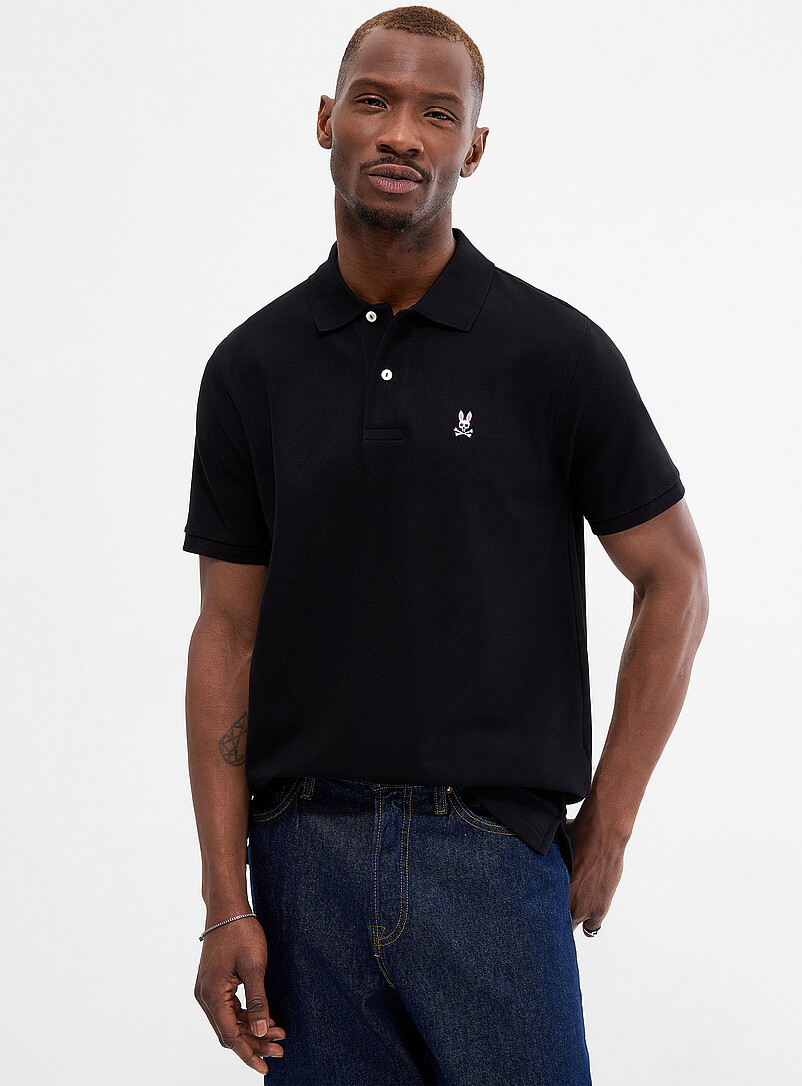
Psycho Bunny's Bunny Logo Piqué Polo is a short-sleeve polo shirt constructed from 100% pima cotton piqué knit with a two-button placket, ribbed cuffs and hem, and an embroidered bunny-and-crossbones logo on the left chest. It is made in Peru and offers a classic relaxed-fit silhouette with a straight hem and side vents, intended for casual and smart-casual wear.
- Material
- 100% Pima Cotton
- Category
- Apparel & Accessories > Clothing > Shirts & Tops
Specifications
Classic piqué polo shirt with embroidered bunny logo, made from soft pima cotton.
100% pima cotton piqué knit, embroidered logo, two-button collar, ribbed edging
- Material
- 100% Pima Cotton
- Gender
- male
- Age Group
- adult
- Condition
- new
- Category
- Apparel & Accessories > Clothing > Shirts & Tops
Additional Attributes
- 100% pima cotton piqué knit
- embroidered bunny logo on chest
- two-button placket
- ribbed cuffs and hem
- made in Peru
- soft and comfortable fabric
Product Insights
The Psycho Bunny Bunny Logo Piqué Polo is a regular-fit 100% pima cotton piqué knit from Peru, priced at $128 CAD—a value relative to other Pima cotton polos. Its waffle weave releases body heat and wicks sweat, while the dense 4,000-stitch chest logo and piqué knit resist stretching and pilling. However, machine drying can cause shrinkage; laying flat to dry is recommended.
Verified claims
- Value
- At $128 CAD, this polo uses Pima cotton typically found in $150+ polos.
- Comfort
- Body heat escapes through air pockets in the waffle weave, and sweat evaporates without clinging in humidity.
- Durability
- 100% pima cotton piqué knit resists stretching and pilling, maintaining shape and texture through many wear-wash cycles.
- Fabric origin
- Made in Peru; because Peru is one of the few global origins for genuine Pima cotton, the cotton is likely grown domestically, and the short field-to-factory journey helps preserve the fiber's softness and drape.
- Fit and drape
- The 100% pima cotton fabric hangs cleanly without bagging, and the ribbed cuffs and hem help keep the polo from bunching during wear.
- Care
- Machine drying can shrink the fabric; lay flat to dry to maintain fit.
- Embroidery
- Chest logo uses 4,000 stitches, making it denser and more durable than typical polo embroidery
- Softness
- The 100% pima cotton has a finer, longer staple than standard upland cotton, giving the polo a soft, almost silky hand that feels broken-in from the first wear.
- Fabric durability
- The piqué knit and long-staple pima cotton help the polo resist pilling, stretching, and wrinkling better than standard cotton or jersey polos.
- Embroidery care
- To protect the embroidered chest logo, wash the polo inside out in cold water and lay it flat to dry rather than machine drying.
Product record
- Title
- Bunny Logo Piqué Polo
- Brand
- Psycho Bunny
- Price
- 128 CAD
- Availability
- In stock
Image Analysis
2 images- 01
Product
Front view of a black short-sleeve piqué polo worn by a model; visible features include a two-button placket with white buttons and a small embroidered bunny-and-crossbones logo on the left chest.
- Overall silhouetteShort-sleeve polo with a relaxed fit on the model, straight hem that falls to the top of the hips, and a classic fold-down collar.
1 region
x 0.15 · y 0.10 · w 0.70 · h 0.60 (high) - Collar and placketFold-down polo collar with a short placket showing two round white buttons; the placket opening is centered and the top button area sits near the base of the neck.
1 region
x 0.38 · y 0.12 · w 0.24 · h 0.16 (high) - Left chest logoSmall embroidered bunny-with-crossbones motif located on the left chest area; the emblem contains lighter contrasting colors against the black fabric.
1 region
x 0.53 · y 0.28 · w 0.06 · h 0.06 (high) - Sleeve finishShort sleeves end with a narrow cuff fold in the same fabric and color as the body.
2 regions
x 0.15 · y 0.26 · w 0.20 · h 0.12 (high); x 0.68 · y 0.26 · w 0.20 · h 0.12 (high) - Fabric texturePiqué knit texture is subtly visible on the shirt surface, appearing as a fine, slightly raised knit typical of polo shirts.
1 region
x 0.20 · y 0.18 · w 0.60 · h 0.40 (medium)
Other
Studio-style image showing a model wearing the product against a plain light background; model is shown from head to mid-thigh and is paired with dark denim jeans and a bracelet; even lighting with soft shadowing.
- Model presenceMale model wearing the polo; visible from head to mid-thigh with both arms relaxed, right hand near pocket and left hand hanging down.
1 region
x 0.10 · y 0.02 · w 0.80 · h 0.96 (high) - Styling propModel is wearing dark blue denim jeans that are visible from the waist down and are partially tucked under the shirt hem.
1 region
x 0.25 · y 0.62 · w 0.50 · h 0.36 (high) - Accessories and tattoosThin bracelet on the model's left wrist and a visible forearm tattoo on the right inner forearm.
2 regions
x 0.12 · y 0.72 · w 0.20 · h 0.18 (high); x 0.64 · y 0.38 · w 0.18 · h 0.28 (high) - Background and lightingPlain light gray to white seamless background with soft, even studio lighting and minimal shadows.
Colors
black· polo body#0D0D0Ewhite· placket buttonslight pink· embroidered logo pink detailwhite· embroidered logo white detail- Overall silhouetteShort-sleeve polo with a relaxed fit on the model, straight hem that falls to the top of the hips, and a classic fold-down collar.
- 02
Product
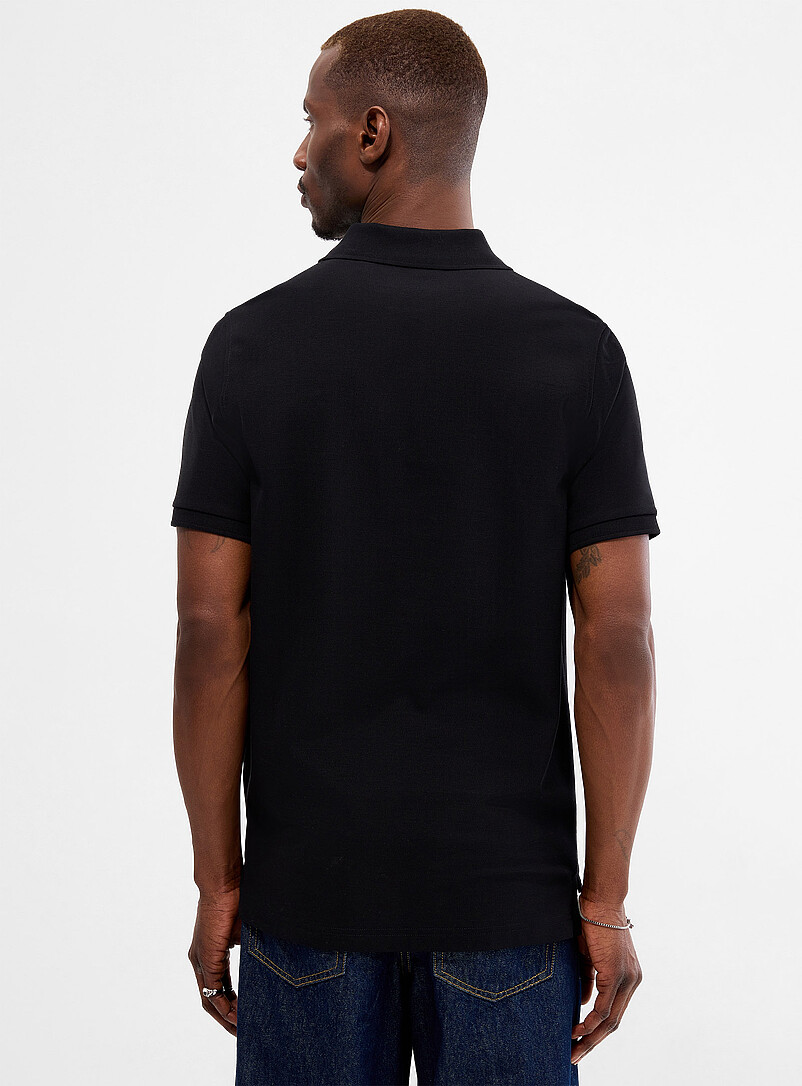
Rear view of a short-sleeve black piqued polo worn by a model; visible features include a flat knit polo collar, set-in short sleeves with ribbed cuffs, a straight hem with small side vents, and a smooth piqued knit back panel with no visible logos or seams across the center back.
- Back panelFlat smooth back panel of a black piqued knit fabric with no visible logo or printed text.
1 region
x 0.18 · y 0.18 · w 0.64 · h 0.62 (high) - CollarLow-profile flat knit polo collar in matching black, lying flat against the neck with a subtle seam at the collar base.
1 region
x 0.34 · y 0.06 · w 0.32 · h 0.10 (high) - Sleeve cuffsShort sleeves ending in slightly narrower ribbed cuffs in the same black color.
2 regions
x 0.10 · y 0.27 · w 0.20 · h 0.18 (high); x 0.70 · y 0.27 · w 0.20 · h 0.18 (high) - Side seams and hem ventsStraight hem that extends below the waistband with small side vents where the side seams meet the hem.
1 region
x 0.18 · y 0.76 · w 0.64 · h 0.18 (medium) - Shoulder constructionSet-in sleeve shoulders with a smooth shoulder line and no visible shoulder panels or raglan seams.
1 region
x 0.18 · y 0.12 · w 0.64 · h 0.20 (high)
Other
Studio rear product shot on a model against a plain light gray background; model is centered and standing with arms relaxed at sides. Visible jeans and arm tattoos are present but are not part of the polo.
- Shot compositionCentered rear-view studio photograph showing the model from head to hips against an even light gray background.
- Model stylingModel wearing dark blue denim jeans visible from the waistband down; hands rest at the sides with rings and a bracelet visible.
1 region
x 0.14 · y 0.82 · w 0.72 · h 0.16 (high) - Tattoos and jewelryTattoo visible on the model's right upper arm and small rings on the left hand; a thin bracelet on the right wrist.
2 regions
x 0.68 · y 0.34 · w 0.12 · h 0.20 (high); x 0.48 · y 0.86 · w 0.20 · h 0.10 (high) - Lighting and shadowsEven frontal studio lighting with soft shadows along the model's arms and slight highlight on the top of the shoulders.
Colors
deep black· body and collar#0D0D0E- Back panelFlat smooth back panel of a black piqued knit fabric with no visible logo or printed text.
Brand PDP Lookup
- Brand
- Psycho Bunny
Mens White Pb Archive Classic Bunny Pique Polo
Variants
15 SKUs| SKU | Title | Price | Avail |
|---|---|---|---|
| 4698596 | Bunny Logo Piqué Polo - Black - Small | CA$128.00 | Yes |
| 4698597 | Bunny Logo Piqué Polo - Black - Medium | CA$128.00 | Yes |
| 4698598 | Bunny Logo Piqué Polo - Black - Large | CA$128.00 | Yes |
| 4698599 | Bunny Logo Piqué Polo - Black - X-Large | CA$128.00 | Yes |
| 4698600 | Bunny Logo Piqué Polo - Black - Xx-Large | CA$128.00 | Yes |
| 4725587 | Bunny Logo Piqué Polo - Khaki/sage/olive - Small | CA$128.00 | Yes |
| 4725588 | Bunny Logo Piqué Polo - Khaki/sage/olive - Medium | CA$128.00 | Yes |
| 4725589 | Bunny Logo Piqué Polo - Khaki/sage/olive - Large | CA$128.00 | Yes |
| 4725590 | Bunny Logo Piqué Polo - Khaki/sage/olive - X-Large | CA$128.00 | Yes |
| 4725591 | Bunny Logo Piqué Polo - Khaki/sage/olive - Xx-Large | CA$128.00 | Yes |
| 4698601 | Bunny Logo Piqué Polo - Indigo/dark Blue - Small | CA$128.00 | Yes |
| 4698602 | Bunny Logo Piqué Polo - Indigo/dark Blue - Medium | CA$128.00 | Yes |
| 4698603 | Bunny Logo Piqué Polo - Indigo/dark Blue - Large | CA$128.00 | Yes |
| 4698604 | Bunny Logo Piqué Polo - Indigo/dark Blue - X-Large | CA$128.00 | Yes |
| 4698605 | Bunny Logo Piqué Polo - Indigo/dark Blue - Xx-Large | CA$128.00 | Yes |